Click to zoom
Cancer remains one of the most complex and challenging diseases in modern medicine. Despite significant advances in diagnostics, therapeutics, and molecular biology, the fundamental processes underlying cancer development continue to demand deeper exploration and integration across disciplines.
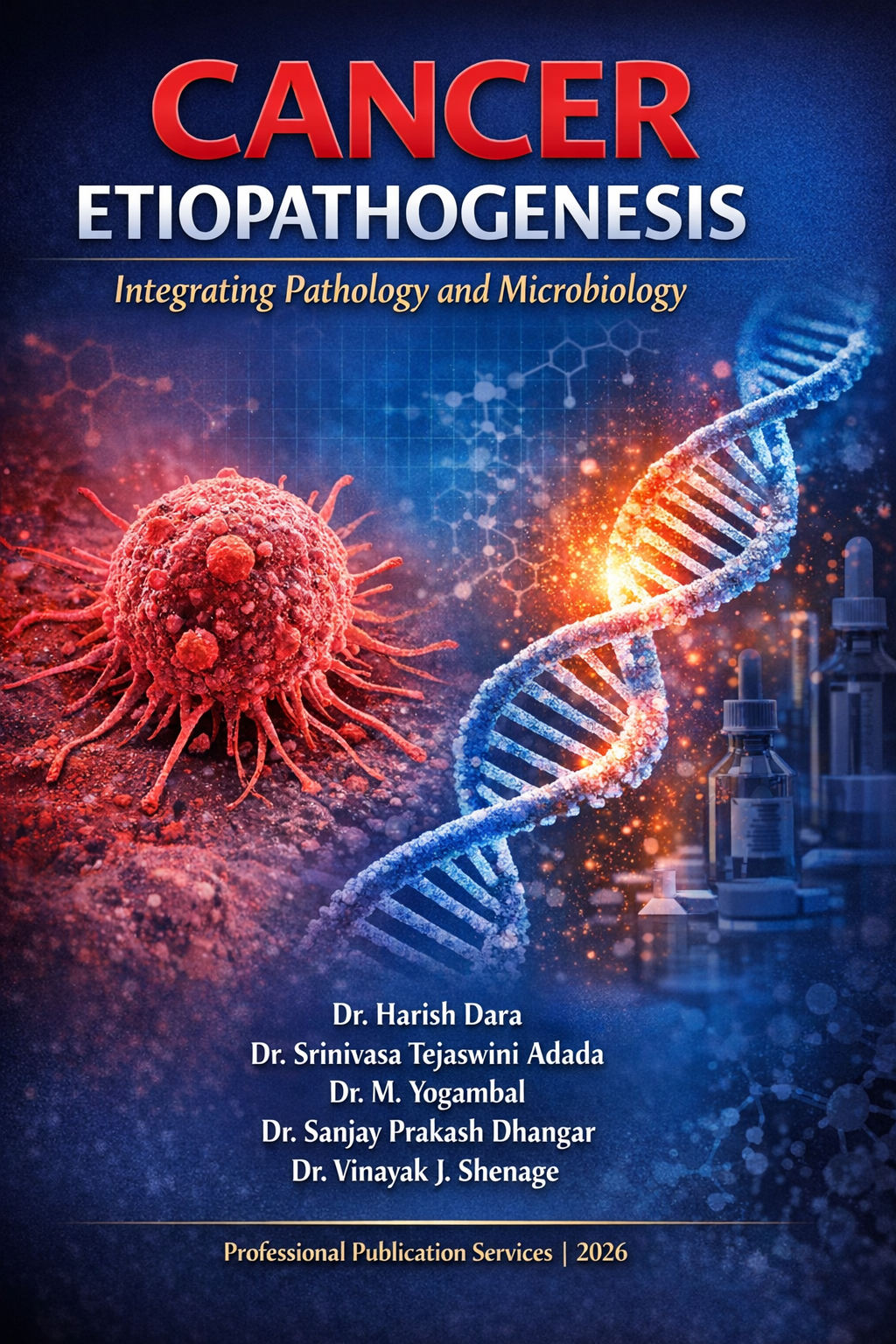
Cancer Etiopathogenesis: Integrating Pathology and Microbiology has been developed to provide a comprehensive and structured understanding of the causes and mechanisms of cancer. This book bridges the domains of pathology and microbiology, offering a unified perspective on genetic, environmental, chemical, physical, and infectious factors involved in carcinogenesis.
The text is organized into three major sections. The first section lays the foundational principles of cancer etiology, including genetic alterations, molecular mechanisms, and environmental influences. The second section focuses on physical and chemical carcinogens, exploring their mechanisms and clinical implications. The third section highlights the critical role of microbial agents—including viruses, bacteria, parasites, and the microbiome—in cancer development.
Special emphasis has been placed on clarity, conceptual depth, and integration of molecular mechanisms with clinical relevance. The inclusion of structured chapters and illustrative figures aims to enhance understanding for students, postgraduate trainees, and practicing clinicians.
We hope this book serves as a valuable resource for academic learning, research, and clinical application, and contributes to a deeper understanding of cancer biology.