Click to zoom
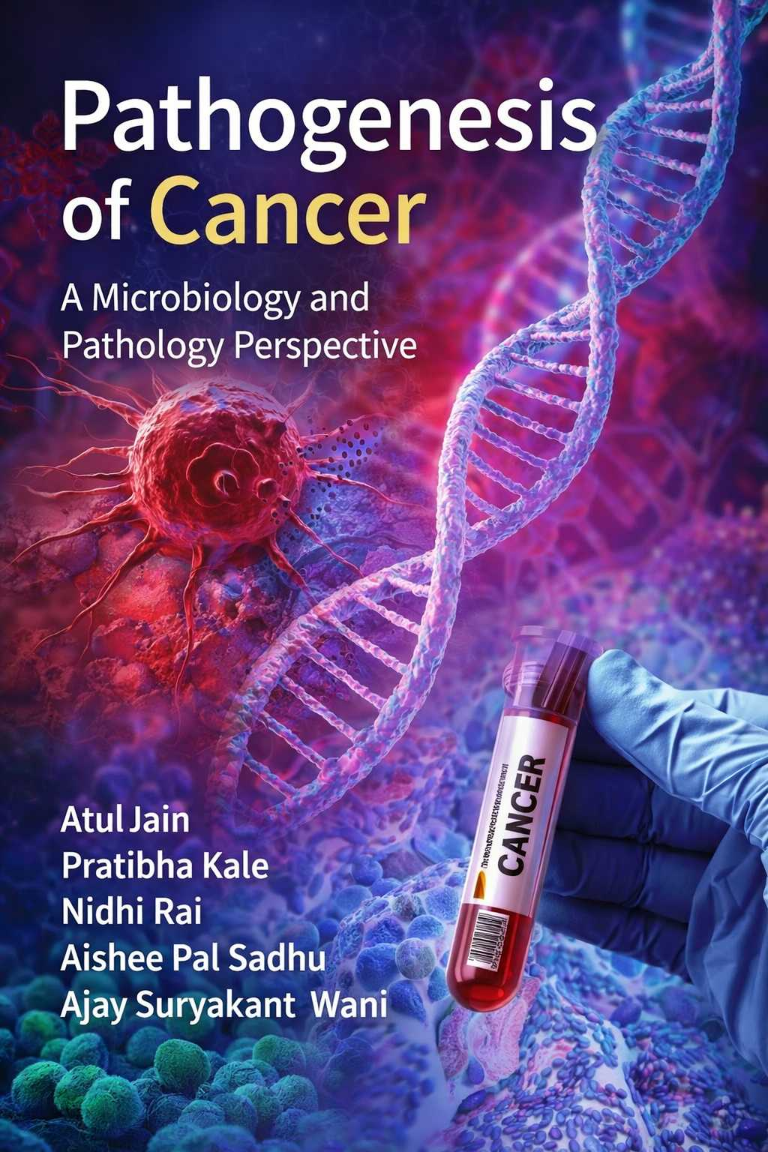
Pathogenesis of Cancer: A Microbiology and Pathology Perspective is a comprehensive academic resource that explores the multifactorial origins and biological mechanisms underlying cancer development. The book presents an integrated understanding of carcinogenesis by combining concepts from pathology, microbiology, molecular biology, immunology, and public health, making it a valuable reference for medical students, researchers, and healthcare professionals.
The text begins with foundational concepts of cancer etiology, highlighting the multistep nature of carcinogenesis and the roles of genetic susceptibility, environmental exposures, and lifestyle factors. It further examines the molecular basis of cancer, including genetic mutations, epigenetic alterations, cell cycle dysregulation, apoptosis evasion, angiogenesis, and metastatic progression. These chapters provide readers with a clear understanding of how normal cellular regulatory mechanisms fail and give rise to malignant transformation.
A distinctive strength of the book lies in its detailed coverage of infectious causes of cancer. Dedicated sections explore oncogenic viruses, bacterial infections, parasitic associations, and the emerging role of the human microbiome in tumor development. By linking microbial pathogenesis with oncogenesis, the book offers a unique perspective on infection-related cancers and their preventive implications.
The volume also addresses the contributions of chronic inflammation, immune dysregulation, hormonal influences, metabolic factors, and environmental carcinogens. Histopathological correlates and molecular markers associated with etiological factors are discussed to bridge basic science with diagnostic pathology and clinical practice. The later chapters emphasize preventable causes of cancer, screening strategies, and future research directions, including precision prevention, microbiome-based diagnostics, and artificial intelligence in etiological